.png)
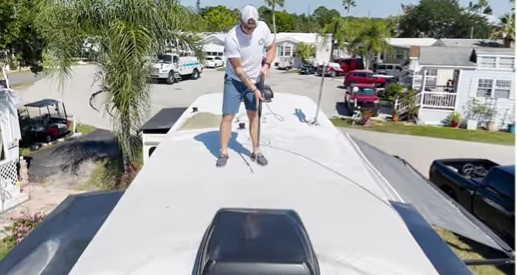
If you have shopped for an RV roof fix in the last few years, you have probably run into the name Crazy Seal. It gets a lot of hype as a one-and-done, roll-it-on answer, so let us be clear up front: Crazy Seal is a protective coating, not a repair. It seals and extends the life of a roof that is already in good condition, but the roof has to be sound and dry before it goes on. It does not fix hail damage, punctures, or a failing roof deck.
This article breaks down what Crazy Seal actually is, what it is made of, what roofs it can go over, and what the warranty really promises versus what it sounds like it promises. We will also separate the manufacturer's marketing language from what independent owners report, and talk through where a coating like this fits (and does not fit) in Colorado's UV and hail climate. FiberglassWorx is Colorado's only certified Crazy Seal installer, but our goal here is to give you a straight, factual rundown first.
Crazy Seal is a fluid-applied, fiber-infused silicone roof membrane made by Crazy Seal Products, Inc. It is not a simple lap sealant dabbed at seams, and it is not a full rigid roof replacement either. It sits in its own category: a liquid coating that cures into a seamless membrane over an existing roof deck. Because it goes on over the existing roof, that roof has to be sound and dry first. Crazy Seal protects and waterproofs a good roof, it does not repair a damaged one.
The manufacturer describes it as the final step in building a monolithic (single, seamless) roof surface, applied over the whole roof rather than just patched at trouble spots. It is marketed for RVs, motorhomes, fifth wheels, travel trailers, pop-ups, park models, and semi-trailers, and it is sold in do-it-yourself kits as well as installed by certified pros.
In plain English, Crazy Seal is a single-component, moisture-curing silicone that is infused with fibers for added strength. Single-component means it comes ready to use, no mixing two parts together. Moisture-curing means it hardens by reacting with humidity in the air rather than by drying out, which is part of why cure time can shift with weather.
One detail that surprises a lot of first-time buyers: cleanup is done with mineral spirits, not water. That tells you it behaves like a solvent-based silicone rather than a water-based acrylic paint, so tools, brushes, and rollers need proper solvent cleanup and disposal, not a garden hose.
Crazy Seal is the fiber-infused silicone membrane itself. Crazy Caulk is a matching silicone sealant used at seams and edges. Crazy Patch handles existing penetrations and can double as a standalone leak patch. Crazy Tape reinforces repaired areas so the silicone bonds evenly over them, and Crazy Clean is the concentrated cleaner used to strip oils, dirt, and oxidation before any of it goes on.
According to the manufacturer's technical data sheet, Crazy Seal is designed to bond to a wide range of low-slope roof substrates, which is a big part of its appeal for RV owners who are not sure what their roof deck is actually made of. It is described as compatible with:
The manufacturer notes it adheres to most surfaces without a primer, but some substrates may need one, and recommends an adhesion test on a small, representative patch before committing to the whole roof. That single test can save a lot of grief if your roof has an unusual coating history.
Crazy Seal is designed to be approachable for a confident DIYer, but the manufacturer is direct that prep is most of the job. Here is the general sequence, drawn from the technical data sheet.
The roof has to be clean and completely dry before anything else happens. A pressure wash removes loose dirt, road film, chalking, and old residue that would otherwise sit between the roof and the new membrane. This is also the moment to check for soft spots, delamination, or hail and hole damage, since coating over a problem like that would only hide it rather than fix it before it gets worse.
The dedicated cleaner strips oils, oxidation, and residue that a pressure washer alone will not fully remove, and it is applied according to the label instructions rather than eyeballed. Manufacturer guidance is direct that skipping or rushing this step is one of the most common reasons a coating fails to bond properly months or years down the road, so it is not a step worth shortcutting.
Crazy Caulk goes into seams and edges, and Crazy Patch seals around vents, skylights, antennas, and other roof penetrations, sometimes reinforced with Crazy Tape over previously repaired or weak areas. This step builds the foundation the membrane will later roll over edge to edge, so any gap or weak spot left here becomes a weak spot in the finished roof as well.
The product is mixed slowly, never thinned, and rolled on with a solvent-resistant roller at about 1 gallon per 100 square feet, drying to the touch in 4 to 12 hours. Do not apply below freezing, above 120 degrees Fahrenheit, or with rain expected within 2 hours, which narrows the calendar on the Front Range, where mild spring and fall stretches beat a summer day with storms on the forecast.
The headline 50-year warranty is real, but it is worth reading the fine print before you assume it means fifty years of worry-free roofing. Here is what it actually covers, according to the manufacturer's published warranty terms.
None of this makes the warranty meaningless, but it is a materials-defect, product-replacement warranty, not a guarantee that your roof will be problem-free for fifty years. Read it the way you would read any warranty: know what triggers it and what voids it before you rely on it.
We will not sell you Crazy Seal as maintenance-free. A properly applied silicone coating does skip the periodic re-application that older acrylic coatings need, and that is a genuine advantage. But the manufacturer still recommends periodic inspection of the transition areas, the vents, the sanitary pipes, and the skylights, and we agree with that. Think of it as low-maintenance rather than no-maintenance. When we install it for you, we can look those spots over at a routine visit so a small issue gets caught early.
One thing we always tell owners up front: once a roof is coated with Crazy Seal, only Crazy Seal will bond to it. Any future recoat or repair on that surface has to stay in the same product line, because other coatings, even other silicones, are not guaranteed to stick. As Colorado's certified Crazy Seal installer, we plan for that from day one, and it is worth knowing if you intend to keep the rig for years or sell it to an owner who does not know the roof's history.
Crazy Seal is one option in a broader category of RV roof coatings, and it helps to know where it sits relative to the others you will see mentioned in RV forums and at dealerships.
None of these categories is a universal winner. The right choice depends on your existing roof material, and what will fit your needs the best. Not sure? Contact FiberglassWorx today and we can help you choose the right product for your rig.
Colorado's Front Range puts real stress on an RV roof, and it is fair to ask whether a coating like Crazy Seal is actually solving a Colorado-specific problem or just a nice-to-have anywhere. The honest answer is that some of it lines up very well, and some of it does not, and it matters to know which is which.
Denver sits about a mile above sea level, and UV radiation increases noticeably with elevation, a well-documented effect the EPA attributes to less atmosphere filtering the sun at altitude. That means Front Range roofs take meaningfully more UV exposure over a season than the same roof would at sea level, and a flat, sun-exposed RV roof absorbs that all day, every day it sits outside. A reflective, UV-resistant coating addresses a real and constant aging factor here, whatever brand you choose.
The Front Range is known for wide swings between a cold morning and a warm afternoon, and roofs expand and contract with those cycles. That is exactly why any coating's flexibility and adhesion quality matter here, and it is also why the application-temperature limits (no freezing, no triple digits, no rain within 2 hours) genuinely narrow your DIY scheduling window to milder, drier spring and fall stretches.
Colorado sits in what insurers call Hail Alley and ranks second nationally, behind Texas, for hail-related insurance claims, so it is tempting to hope a tough-sounding coating will make a roof hail-proof. It will not. A roof coating is a waterproofing and UV layer, not an impact shield, and no rolled-on product should be treated as protection against a real hailstorm. If your roof already has hail damage, coating over it does not fix the damage. It only traps moisture under a fresh surface, hides the real condition of the roof from view, and can turn a repairable problem into far more expensive structural or delamination damage down the line. A coating belongs on a sound roof, or one that has already been properly repaired, never as a way to mask damage that is still there.
Put together, a coating makes the most sense as ongoing UV and weather protection for a roof that is already in good shape, or as the finishing step after real hail or leak repairs are done, not as a shortcut around them. If you are not sure which situation you are in, that is exactly what an RV roof hail damage repair inspection is for.
Crazy Seal is marketed as DIY-friendly, and a careful owner with good weather timing and patience for prep can apply it themselves. But the owner reports that show up most often in RV forums, things like bubbling or adhesion loss a few years in, tend to trace back to rushed or incomplete prep work, not a bad batch of product. Since the silicone can skin over and tear like a rubber sheet if you fall behind while tooling it, technique matters as much as the product itself.
A certified professional installer reduces that risk by handling the pressure washing, cleaning, seam work, and roll-on under controlled conditions, and can still register the warranty paperwork on your behalf. FiberglassWorx is the only certified Crazy Seal installer in Colorado, working out of a dedicated indoor facility in Commerce City where weather is not a scheduling gamble. If a full recoat is not the right call yet, our RV roof services team can also walk you through repair-first options before any coating goes on, and you can see our recent RV repair work in the gallery.
A roof coating like Crazy Seal can be a smart, long-term layer of protection for a sound roof in a tough climate, but it works best when it is applied correctly to a roof that is already in good condition, not used to paper over damage that needs a real repair first. Whether your rig needs an inspection, a repair, or a professional Crazy Seal install, the crew at FiberglassWorx can tell you honestly which one you need before any product goes on the roof.
Call us at (303) 585-0515, or get a free estimate to get started.
