.png)


When you understand how composite materials behave under stress, the difference between an Escape and a conventional stick-built trailer isn't subtle. It's structural. While most RVs are assembled from flat panels fastened to a frame, Escape takes a fundamentally different approach, one borrowed from marine engineering and proven over decades of real-world use.
Conventional stick-built trailers fight a losing battle against road vibration, moisture, and time. Escape's construction method removes the vulnerabilities entirely rather than managing them with sealants and annual maintenance.
Six models, 14 Floorplans. Lightweight. Towable by select cars, SUV & trucks.
.png)
The Escape 13 is the entry point into fiberglass ownership, designed for drivers of compact crossovers and smaller SUVs who want hard-sided protection without the weight penalty. At just 1,850 pounds dry, it can be safely towed by four-cylinder vehicles like the Subaru Outback, Toyota RAV4, and Honda CR-V. Despite its size, it sleeps three, includes a two-burner stove and refrigerator, and comes standard with a 12V lithium battery and solar-ready electrical system. A portable toilet replaces a permanent black tank, keeping weight low and plumbing simple.
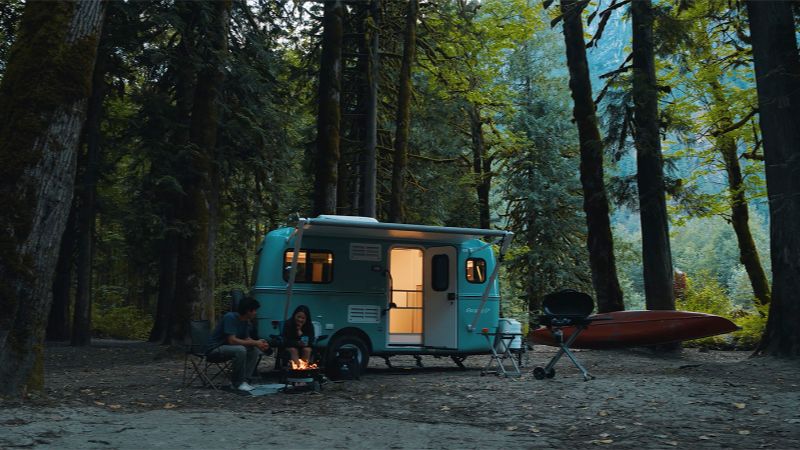

The Escape 17 comes in two configurations built around different camping philosophies. The 17A removes the bathroom entirely in favor of additional storage and sleeping space, ideal for those who camp at facilities with showers and restrooms. The 17B adds a full wet bath with shower and toilet for complete self-containment and extended boondocking. Both share the same narrow 6 ft 8 in width that makes them exceptionally maneuverable on forest roads and easy to tow without extended mirrors.


The Escape 19 is widely considered the best balance in the lineup between towability and livability. It is the smallest Escape model with tandem axles, which dramatically improves highway stability, reduces hitch oscillation, and provides a safety margin in the event of a tire failure. Layout options include a permanent queen bed, eliminating the daily dinette conversion. Water capacity steps up to 28 gallons each of fresh and grey, extending off-grid capability by 40 percent over the 17 series.
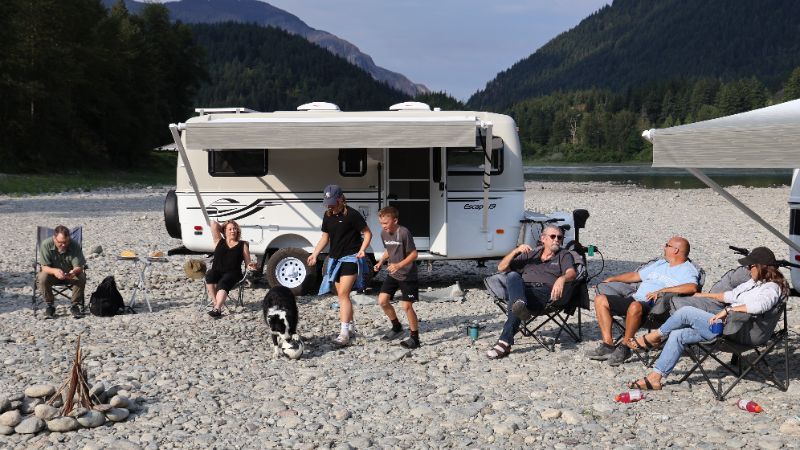

The Escape 21 series steps into full-size territory while keeping the aerodynamic advantages of fiberglass construction. Two shell designs serve different buyer priorities. The 21C Classic maximizes bathroom space and black tank capacity at 22 gallons, with a rear dinette and front bed layout. The 21NE Next Edition uses a squarer profile for a more open interior feel, with flexible layout options including a large U-shaped dinette. At 7 ft 4 in wide, both offer noticeably more interior room than the 19 without the bulk of a full 8-foot wide-body trailer.


The Escape 23 is the most spacious trailer in the lineup and the only model built to a full 8-foot wide-body standard. It is one of the very few molded fiberglass trailers available with a dry bath option, offering a separate shower stall and toilet rather than a combined wet bath. Tank capacities are nearly double those of the smaller models, with 42 gallons of fresh water and 40 gallons each of grey and black, enabling 7 to 10 days of off-grid camping without servicing. An aluminum frame assists in managing weight at this scale.


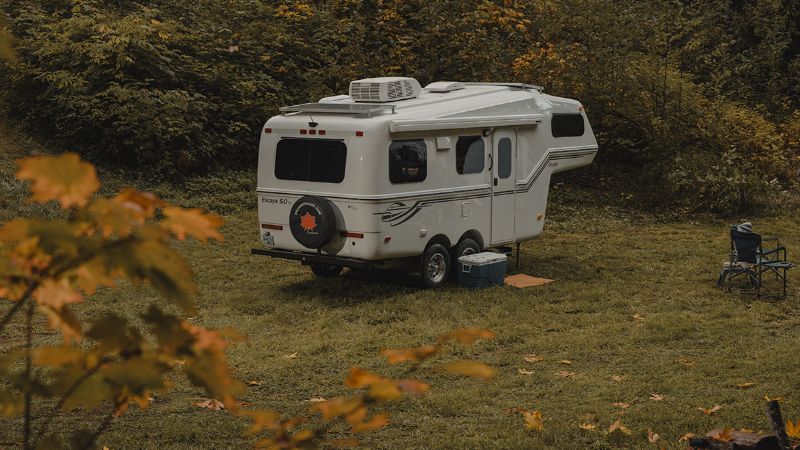
The Escape 5.0 is unique in the lightweight market as a tandem-axle fifth wheel designed specifically for mid-size trucks like the Ford Ranger, Toyota Tacoma, and Nissan Frontier, as well as half-ton pickups. The fifth-wheel hitch placement over the rear axle eliminates trailer sway and shortens the overall rig length compared to a bumper-pull of similar size. A lofted bedroom creates a distinct separation from the living and kitchen area, delivering a residential zone layout that flat-floor trailers cannot replicate.
Get Your Catalog & Guides plus access to new products, upcoming promotions, and more. Unsubscribe anytime.
