.png)
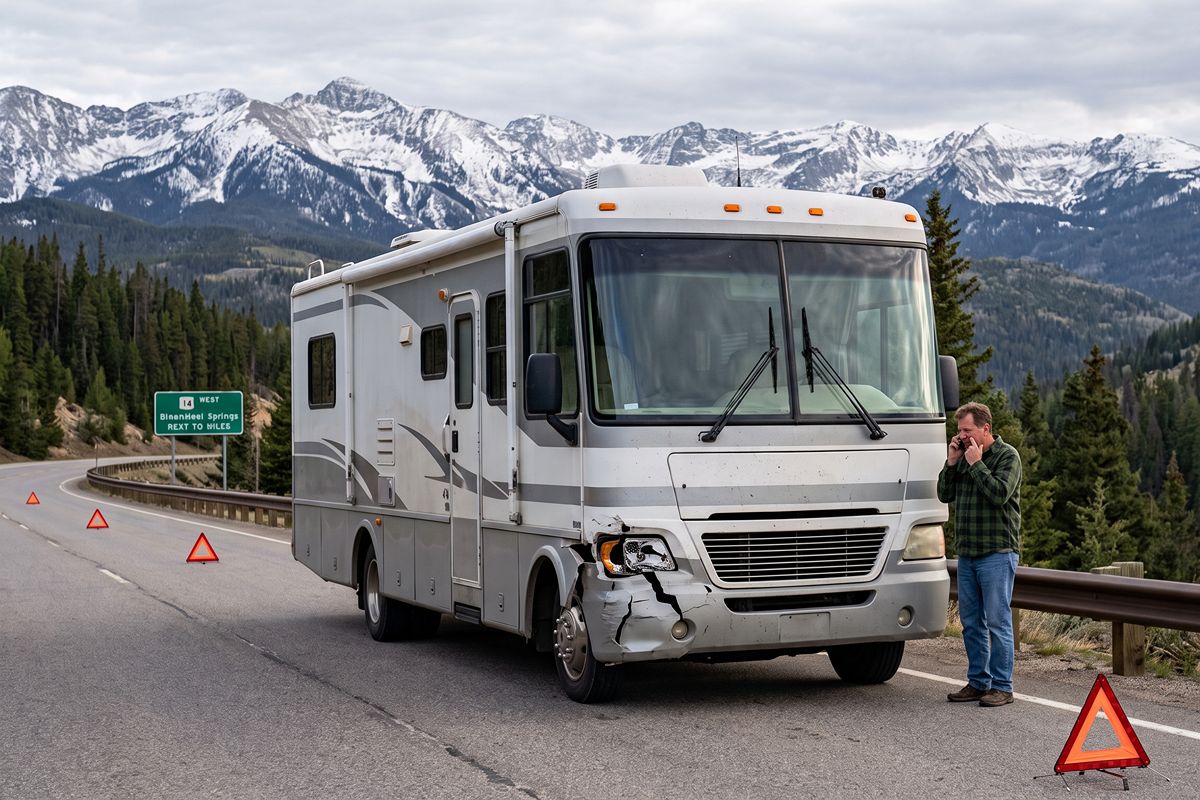
Colorado drivers report roughly 3,300 wildlife-vehicle collisions a year on average, and the total has run as high as 4,000 in recent years, per CDOT. For RV owners, a strike almost always lands up front, on the big molded fiberglass front cap, the fascia, the grille, the headlights, and the radiator behind them. That is a different repair than a car bumper dent, and it usually takes longer to get right.
This guide walks through how often these strikes happen in Colorado, which animals do the most damage, what to do in the moment and right after, which parts typically take the hit, and how comprehensive insurance usually responds. If your rig has already been hit, our RV collision damage repair team can walk the damage with you and start the claim conversation.
The Colorado Department of Transportation puts the average at about 3,300 reported wildlife-vehicle collisions a year over the past decade, with the annual count ranging from roughly 2,000 to 4,000. Recent statewide reporting has trended higher, with 2025 estimates in the range of 7,500 to 7,700-plus wildlife-related crashes and roadkill incidents counted across various state and news sources, so treat any single headline number as an estimate rather than a fixed count.
From 2010 through 2024, CDOT recorded more than 54,000 animal-vehicle collisions statewide, including 48 that were fatal to people and over 5,100 that caused injuries. The Rocky Mountain Insurance Information Association estimates the average property-damage cost of an animal strike at around 3,103 dollars per crash, and nationally the insurance industry pays out close to 1.1 billion dollars a year in wildlife-collision claims, concentrated in the fall.
Deer are involved in close to 83 percent of Colorado's wildlife-vehicle collisions, with elk making up nearly 11 percent, according to Colorado Parks and Wildlife. Deer are the most frequent strike by far, but they are not always the most damaging one for a motorhome.
Elk and moose are dramatically larger and taller than deer, and that size difference changes how a collision plays out. A tall, heavy animal is more likely to ride up over the bumper and front cap into the hood, windshield, and roofline instead of staying low, which tends to spread damage across a wider area of the front end. Bighorn sheep, pronghorn, and black bear also turn up in Colorado corridors, so scanning the roadside for movement and shining eyes matters well beyond deer season. Even a glancing hit can leave small cracks that spread over time if the fiberglass is not checked and sealed.
Wildlife strikes cluster around fall and winter migration plus the deer mating season, known as the rut, and the large majority happen between dusk and dawn when animals are moving and visibility is low. Nationally, the most dangerous months are consistently November, October, and December, and Colorado's pattern tracks closely with that national trend.
If your route to the mountains touches any of these stretches, slow down and stay alert during the dusk-to-dawn window, especially from October through December.
Brake firmly and stay straight. Safety authorities including State Farm are consistent on this point: swerving to avoid an animal is riskier than the strike itself, because it can send a large, top-heavy RV off the road, into a rollover, or into oncoming traffic or a fixed object. A controlled hit is almost always safer than a loss of control.
Deer and elk travel in groups, so if you see one animal, expect more to follow behind it. Use your high beams when there is no oncoming traffic to spot eyeshine earlier, and keep everyone buckled up. There is no credible evidence that car-mounted deer whistles change animal behavior, so do not count on one to prevent a strike.
If a strike does happen, the next few minutes matter. Work through these steps in order, starting the moment the rig comes to a stop.
If the RV still drives, pull well onto the shoulder or the nearest safe turnout and put on your hazard lights right away. Staying in a live lane after a wildlife strike is one of the more dangerous moments of the whole incident, since other drivers may not see a stopped rig until it is too late to react, especially after dark on a two-lane mountain highway.
Dial 911 if a person is injured or if the animal is still in the roadway creating a hazard for other vehicles. Colorado Parks and Wildlife directs drivers to report wildlife-vehicle collisions to the Colorado State Patrol, which can be reached through dispatch or a non-emergency line, even when injuries look minor at first glance, since a report also matters for your insurance file.
Look underneath the front end for coolant, oil, or fuel on the ground before continuing on. A punctured radiator or cracked cooling line can leak quietly and lead to overheating within a few miles, so if you see fluid pooling or smell something burning, wait for a roadside tow service rather than pushing on to the next exit or campground, even if the engine still seems to run fine.
Photograph the front end, the roadway, and the animal if it is safely visible, and note the time, location, mile marker, and direction of travel. This record helps the Colorado State Patrol report and gives your insurance adjuster a clear starting point once you file the claim, which can speed up the whole repair process later.
An animal strike on a motorhome tends to concentrate damage across a predictable set of parts, mostly because the front cap sits ahead of the wheels and takes the impact before anything else does.
In rare, severe hits the frame or chassis mounts can be affected too, which is why a full structural check matters even when the cosmetic damage looks contained. Our RV structural fiberglass repairs team checks beyond the surface before any cosmetic work starts, and lighter gel coat scuffs from the same impact are handled through our cosmetic dents and gel coat pitting service.
A car bumper is a bolt-on plastic part that most auto body shops can swap and blend in an afternoon. An RV front cap is a different animal entirely, and treating it like a car repair is where a lot of the frustration in this process comes from. The cap is molded as one large fiberglass piece with gel coat and, on most coaches, a full painted graphics package layered over it, so a patch that does not match the surrounding paint and decals stands out immediately. Getting a true match usually means either a careful, skilled blend around the damage or repainting the entire cap, decals included.
Underneath the surface, repair means fiberglass lamination and filling to rebuild the cap's shape and strength before anything gets primed. That structural step is easy to rush and hard to inspect once the paint goes back on, which is exactly why it should not be rushed. On top of that, a typical auto paint booth runs about 9 feet tall and 14 by 24 feet, which is too small to fit a motorhome. Refinishing a front cap correctly calls for a dedicated indoor bay sized for RVs, along with fiberglass and gel coat experience that a generalist auto shop does not use every day. That is a different vehicle and a different trade, and it is exactly the lane we work in every day at our dedicated indoor facility in Commerce City.
Hitting an animal directly is typically handled as a comprehensive claim, not a collision claim, because it is treated as an unpredictable, not-at-fault event. Comprehensive coverage generally applies whether you are insuring a car or an RV, subject to your policy's deductible, and it commonly does not carry the same surcharge risk as an at-fault collision claim.
If you swerve to avoid the animal and hit something else instead, without ever striking the animal, that usually falls under collision coverage rather than comprehensive. Either way, confirm your deductible and coverage details with your insurer before repairs begin, and avoid authorizing permanent work until an adjuster has inspected the damage. This is general information, not insurance or legal advice, and your policy language always controls the outcome.
Slow down through known corridors during dusk and dawn, especially from October through December when national wildlife-strike numbers peak. Scan both shoulders continuously rather than just the road ahead, since animals typically appear from the tree line or ditch before they reach the pavement.
Use high beams whenever no oncoming traffic is present, and back off your following distance so you have more room to brake without swerving. If you do make contact, remember that a controlled, straight-line stop protects you and your passengers far better than a last-second dodge, and get the rig off the road and checked for fluid leaks before continuing your trip.
Tell us what you need and we will handle the rest. Our crew works out of a dedicated indoor facility in Commerce City with the space and experience RV fiberglass work actually requires, from lamination and color matching to full repaint and decal work, and we handle insurance conversations directly with your adjuster so you are not stuck relaying paperwork back and forth.
Call (303) 585-0515, or get a free estimate to get started.
