.png)
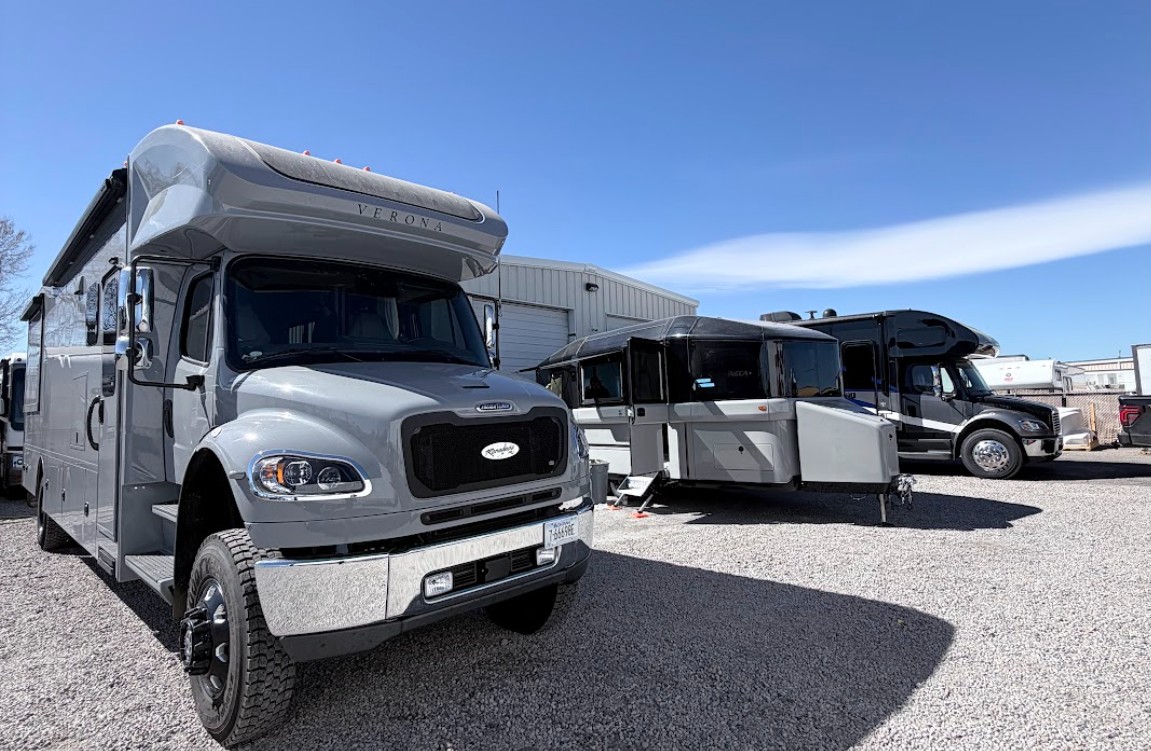
A motorhome is not a car with a bigger footprint. A Class A diesel pusher or a large Class C coach is built on a commercial truck or bus chassis, wrapped in laminated fiberglass sidewalls, and loaded with roof-mounted air conditioners, slide-outs, and satellite domes that a sedan never has to account for. Repairing one right takes different bays, different lifts, and different training than a standard collision center keeps on hand.
This guide walks through what actually separates a real RV body shop in Denver from a general auto shop that just happens to say yes to RVs: the facility, the materials knowledge, the parts sourcing, and the insurance process. If your coach has been turned away or you just want to know what to look for, this is the checklist.
A car body shop is built around sheet-metal panels, small paint booths, and lifts rated for a few thousand pounds. A motorhome specialist is built around a completely different vehicle: a rig that can run 30 to 45 feet long, weigh well into the tens of thousands of pounds, and use laminated fiberglass and gel coat instead of stamped steel. The bay has to be bigger, the lift has to be rated heavier, and the paint booth has to clear a roofline packed with vents and antennas.
The bigger difference is know-how. A generalist shop can weld a bumper bracket, but few have practiced fiberglass lamination, gel coat color matching, or the deep structural rebuilds needed when a collision reaches the coach's wall panels or roof. That is the gap a dedicated RV collision repair team is built to close.
Most auto body shops simply do not have the room. A drive-through bay sized for pickup trucks cannot fit a 35-foot diesel pusher without a multi-point turn the shop was never designed for, and a standard automotive paint booth (commonly around 9 feet tall and roughly 14 by 24 feet) is too short and too narrow to enclose a motorhome roof loaded with air conditioners and vent covers.
It is not laziness, it is capability. A shop without RV-rated lifts, long straight-in bays, and fiberglass fabrication experience is right to decline the job rather than risk a bad repair. That is exactly why FWX exists: when other companies say no, we say yes, because the shop was purpose-built for rigs, not retrofitted for them.
Rig class is not just a size label, it changes how a repair has to be approached. Each type starts from a different base structure, and a shop that only knows one type will misjudge the others.
The differences matter because the repair method that works on one class can be the wrong move on another.
Class A coaches start as a bare gas or diesel chassis, often a Ford platform or a Freightliner or Spartan diesel frame, with a large fiberglass-and-frame living box built on top. That box is where most of the collision, hail, and structural work happens, and it is the largest, heaviest rig class a shop will handle.
Class B camper vans are built inside an existing commercial van shell, typically in the 18 to 24 foot range, so repairs often blend factory van metal with aftermarket fiberglass conversion panels. Class C rigs are built on a cutaway van or truck chassis with the signature cab-over bunk, which means the fiberglass box is bonded to a factory cab rather than replacing it.
Towables have no engine or drivetrain to consider, but they are not simpler to repair. Fifth wheels use a raised pin-box coupling that rides over a truck's rear axle, giving a more stable tow and more interior layout options, while travel trailers use a rear bumper hitch and tend to be lighter. Both still rely on the same laminated fiberglass wall and roof construction as a motorhome.
Before dropping off a rig, it is worth asking what the shop actually has on the floor. Look for these:
FWX runs its work through a dedicated facility at 7685 Dahlia Street in Commerce City, built around exactly this kind of rig, not a car.
Yes, and this is one of the harder skills to find. A motorhome's exterior often mixes fiberglass gel coat panels, painted fiberglass caps, and printed graphics decals on the same sidewall, and each surface reacts differently to color, gloss, and age. Years of intense Colorado sun and big temperature swings at altitude fade gel coat faster than most owners expect, so even a correct factory paint code may no longer match the rest of the rig.
A specialist blends and color-matches across those mixed surfaces so a repaired panel does not read as a patch. That same eye for fading and mismatched substrates is what goes into fiberglass restoration work on oxidized or sun-worn panels, and full-body repaint is a specialized job in its own right, distinct from a quick touch-up.
Deeper repairs go past the visible skin and into the sandwich construction underneath. Here is the general order of operations on a serious rebuild.
A visual crack or dent is often just the surface of a bigger problem. The crew checks the laminated wall (fiberglass skin bonded to a foam or lauan core), the aluminum tube framing beneath it, and the roof and seams nearby, because impact damage travels further through a rig's structure than it does through sheet metal.
Damaged skin, core material, and framing are all cut back to sound material rather than just the cracked or dented spot on the surface. On a structural hit, this can mean opening up a wider section of wall than the visible damage suggests, so the new repair bonds to material that is actually solid rather than compromised underneath.
New fiberglass skin, core, and framing are fabricated by hand and bonded back into the structure, matching the original wall thickness and lay-up rather than just patching over a hole with filler. This step is where a car-shop background does not transfer at all; it is a fabrication skill built around laminating fiberglass, not a bodywork skill built around sheet metal.
The rebuilt section is color-matched, finished, and every seam and penetration nearby is resealed before the coach leaves the shop. Skipping that resealing step is how a solid structural repair still ends up with water intrusion and delamination months later, so it is always treated as part of the job, never an afterthought or a later add-on.
Motorhomes are assembled from parts made by dozens of different suppliers, and a repair often needs a part specific to one coachbuilder's model year.
Insurers total a vehicle when the estimated repair cost crosses a set percentage of its actual cash value, and that threshold is not a fixed number. It varies by insurer and by policy, and commonly falls somewhere in a wide range depending on the company and the state.
On an expensive Class A or Class B, that math matters more than on an average car, because actual cash value and repair scope both run higher. A detailed, itemized estimate from a shop that understands motorhome construction can sometimes keep a genuinely repairable coach under that threshold, where a vague or padded estimate pushes it over. This is also where a Colorado owner should ask about the state's rebuilt-title process if a coach is ever branded salvage, since a rebuilt motorhome has to be inspected and retitled before it is back on the road.
Yes. FWX handles the estimate for RV collision repair in Denver and communicates directly with adjusters so owners are not stuck relaying paperwork back and forth between the shop and the insurance company. That includes documenting hidden damage behind the visible skin, which matters most on a structural claim where the first estimate often understates what the repair actually requires.
This is general information, not legal or insurance advice; every policy and claim is different, and a coverage question should always go to the adjuster or the policy itself. What FWX can promise is a straight answer about what the rig needs and an estimate built for a motorhome's actual construction, not a car's.
Class A, Class B, Class C, fifth wheel, or travel trailer, the crew at FWX works on the rig you actually have, not a scaled-up car. Tell us what you need and we will handle the rest. Call or text (303) 585-0515, or get a free estimate to get started.
