.png)
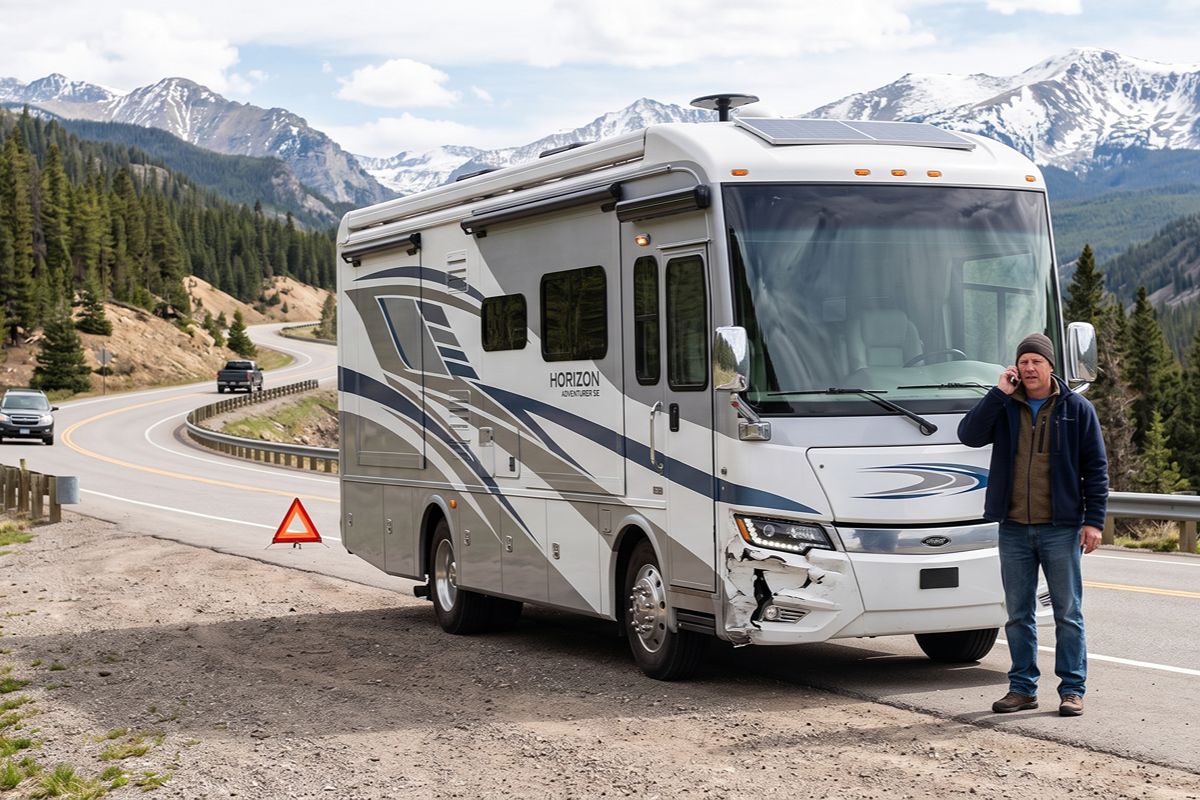
A collision in an RV is not like a fender-bender in a car. The rig is heavier and harder to move, it is probably full of your belongings, and it may not be safe to drive away. In the moment, it is easy to freeze up or skip a step that matters later.
This guide lays out what to do after an RV collision near Denver, in order, from the first minutes at the scene through the tow, the insurance call, and the repair. It is written for Colorado roads and Colorado law.
One note before we start: this is general information for RV owners, not legal advice, so confirm the specifics with the police, your insurer, or an attorney. For the repair itself, FiberglassWorx is Denver's RV collision repair specialist, and we walk owners through this every week.
The first few minutes are about people, not the rig. Work through it in order and try to stay calm.
Before anything else, check yourself and everyone on board for injuries. Call 911 right away if anyone is hurt, if you smell fuel or propane, if there is any sign of fire, or if your rig is blocking a live lane of traffic. When you are not sure how bad it is, treat it as serious and let the dispatcher decide what help to send.
If the RV still drives and it is safe to move, ease it onto the shoulder or the nearest exit and switch on your hazard lights. If it will not move, or you are unsure, leave it and get everyone well clear of traffic. On a busy Front Range interstate, standing beside a disabled rig is one of the most dangerous places you can be.
Before you start looking over the damage, close the propane supply at the tank. A collision can loosen a line or fitting you cannot see, and shutting the gas off first keeps a small problem from turning into a fire. Check your owner's manual for the exact shutoff on your coach, since the location varies from one rig to the next.
Give other drivers plenty of warning. Set your reflective triangles well back from the rig, farther than you would for a car, because an RV is long and takes more room to see around. This matters even more in Colorado low light, blowing snow, or a sudden Front Range storm, when stopping distances get long fast.
Colorado law is strict about reporting. You must give immediate notice to the nearest police authority any time a crash causes injury, death, or any property damage at all. That could be the Colorado State Patrol on the interstates and state highways, or your local department, since city police often cover the interstate where it runs inside city limits. The word that matters is immediate, so make the call from the scene rather than planning to sort it out later.
There is one narrow exception. For minor, property-only damage under roughly 1,000 dollars with no injuries, an officer may not be required to come out and write a report. Even then, you can ask for one, and a report is triggered if anyone involved cannot show proof of insurance. When police do respond and investigate, they file the report for you.
If you are visiting from out of state, the same rules apply. Colorado's reporting duty follows the road, not your registration, so a rig plated anywhere is covered while you are driving here.
Skipping the report is a real offense, not a technicality. Failing to report a crash is a class 2 misdemeanor traffic offense in Colorado, and leaving the scene is far more serious.
The penalties for leaving climb with the harm done. A hit-and-run ranges from a misdemeanor up to a felony depending on whether someone was injured or killed, and a conviction can cost you your driver's license on top of the criminal charge.
The takeaway is simple. Stay, make sure everyone is safe, and report. It protects you legally, and it starts your insurance claim on solid footing with an official record of what happened.
Good documentation at the scene is what makes the insurance claim smooth weeks later. Get it while everything is still in front of you.
Those same photos are the starting point for the documentation we hand your adjuster once the rig reaches our RV collision shop.
Some collision damage is obvious and some hides under the skin. When you are in doubt, tow it. Driving a compromised rig can turn a repair into a total loss.
The dangerous part is what you cannot see. A hard hit can shift the frame or crack a laminate behind an intact-looking panel, which is exactly the kind of structural damage a general body shop misses. When in doubt, have it towed and inspected.
Not your average tow truck. A big coach can weigh many tons and often runs on air brakes, so it usually needs a flatbed or a heavy-duty, semi-class wrecker run by someone who tows RVs for a living. A light-duty truck is not going to move it safely.
Air brakes add a wrinkle. A diesel pusher may need the wrecker to supply air pressure just to release the parking brakes so the coach can roll. Get the setup wrong, or pick the wrong tow angle, and you can crack the front cap or damage the body on the way to the shop.
FiberglassWorx is not a tow company, but a damaged rig can be delivered straight to our indoor shop. Call a heavy-duty operator who knows RVs, and tell them what you are driving so they bring the right truck.
An RV is a home on wheels, so there is more to account for than in a car. Once everyone is safe, work through the inside.
Call sooner rather than later. Many RV policies want quick notice, and an early claim keeps everything else moving.
That last point saves a lot of headaches. FiberglassWorx documents the damage and deals with your adjuster directly, so look for a shop that handles the insurance directly rather than leaving it on you.
Where you take the rig shapes the entire repair. An RV collision is not car bodywork. It is fiberglass, molded caps, and coach systems on an oversized body, so it calls for a shop set up specifically for RVs, like a dedicated Denver RV body shop.
Molded fiberglass front and rear caps, laminated sidewalls, slide-outs, and leveling jacks are nothing like the stamped-steel parts on a car. Repairing them takes RV-specific skills, oversized bays, and a paint booth tall and long enough for a coach. A general auto shop is rarely set up for any of that, which is why many will not take the work. Get the materials or the alignment wrong and the repair shows, or it fails down the road.
A good RV shop does more than fix the damage. It documents everything to adjuster standards, submits the photos, and works directly with your insurer, so you are not stuck relaying messages. FiberglassWorx does this as standard, and it is often the difference between a claim that drags and one that moves. You can see the scale of the work on a real Class A collision rebuild.
After the body and structural work is finished, the repair should be verified before the rig goes back on the highway. That means checking the alignment of the cap and panels, the integrity of the fiberglass, and the lighting. Body and structural repair is separate from mechanical work, so if the crash involved the brakes, tires, or drivetrain, have a mechanic check those as well.
It comes down to a simple sequence. Stay safe, report the crash, document everything, tow it smart, call your insurance, and choose a shop built for RVs. Handle those in order and a stressful day becomes a manageable one.
When the rig is ready for repair, FiberglassWorx is a dedicated indoor fiberglass shop at 7685 Dahlia Street in Commerce City. We rebuild collision and structural damage with marine-grade materials, handle the insurance directly, and turn most jobs in four to six weeks instead of the four to eight months you often hear from dealerships. It is backed by 200-plus five-star Google reviews and a better-than-factory standard. When other companies say no, we say yes.
Tell us what you need and we will handle the rest. Call or text (303) 585-0515, or get a free estimate to get started.
