.png)
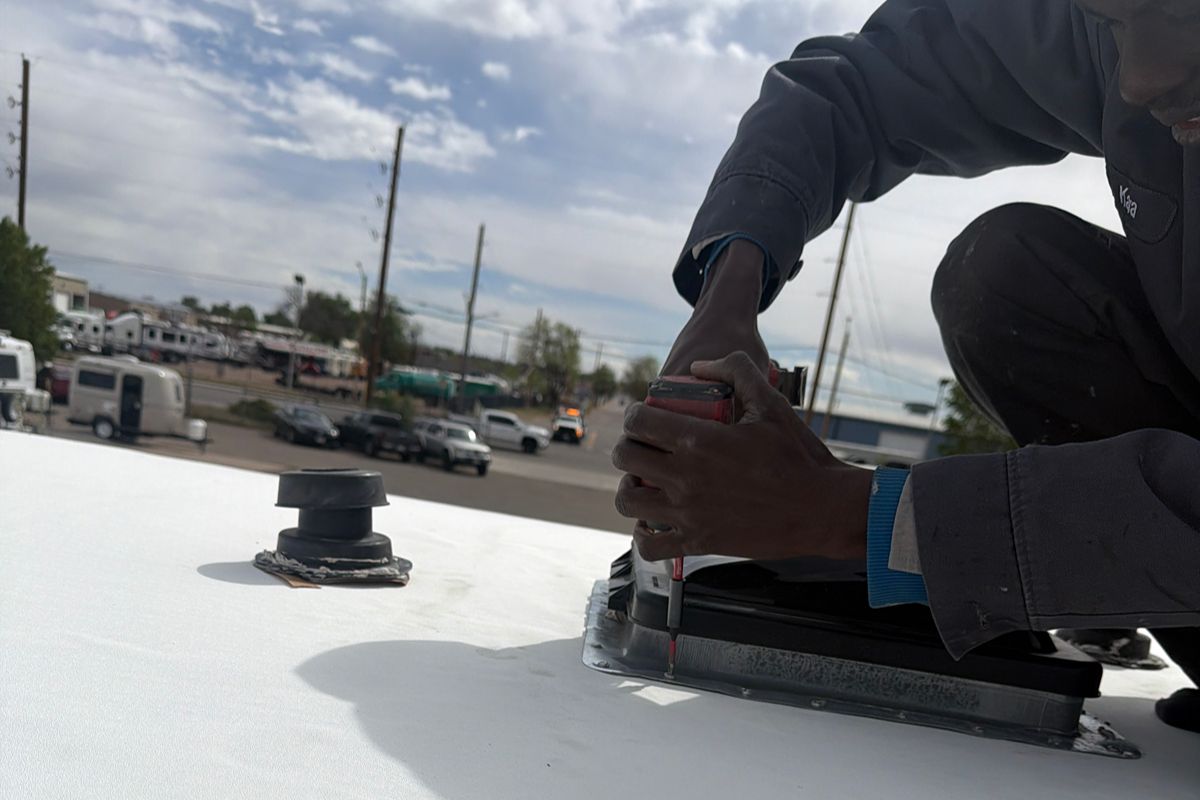
After a Front Range hailstorm, you are going to hear three very different words for your roof: repair, replace, and coat. They sound interchangeable. They are not, and picking the wrong one is how a manageable problem turns into a nightmare.
The trap is the coating. It sounds cheap and easy, and in the right situation it is a smart move. But a coating is waterproofing for a roof that is already sound, not a structural fix. Applied over hail damage, it hides the problem, traps moisture, and can sink your insurance claim.
This guide walks through how each roof type takes hail, what repair, replacement, and coating actually mean, when each one is the right call, and how insurance treats them. Because FiberglassWorx does all three, the goal here is an honest answer, not a sales pitch.
First, know what you are working with. The three common RV roofs react to hail in very different ways, and the fix depends on which one is over your head. Not sure which you have? Check the owner's manual, or feel it: rubber is soft and gives a little, and fiberglass is hard and smooth.
Whatever is up there, the next question is what to actually do about the damage.
These three words get thrown around like they mean the same thing. They do not, and understanding the difference is the whole ballgame, because picking the wrong path is how a cheap job becomes an expensive one.
A repair fixes the actual damage. That means patching a tear, resealing seams and roof penetrations, swapping out damaged vents, AC shrouds, and skylights, and addressing cracks in fiberglass. It restores the roof you already have, and it is the right move when the damage is localized and the rest of the roof is sound. This is the everyday work of an RV roof repair.
A replacement is a bigger job. The old membrane or skin comes off, the decking underneath gets inspected and repaired, and a new roof goes on. It resets the clock with a fresh membrane and warranty, and it is the answer when the damage is too widespread, or the structure underneath too far gone, for a repair to hold. That is a full RV roof replacement.
A coating is a liquid layer rolled or sprayed over a sound, dry roof for waterproofing and UV protection. It renews a good roof and buys it years of extra life. What it does not do is repair a damaged one. Used correctly, an RV roof coating is maintenance, not a hail fix, and that distinction is where a lot of owners get into trouble.
The short answer is no. Coatings are built to seal and protect a roof that is already in good shape. They are not designed to restore roofing that has been fractured, bruised, or punctured by hail, and no amount of coating turns damaged roofing back into sound roofing.
Rolling a coating over hail damage backfires in a few ways. It traps whatever moisture is already in there. It hides cracks and punctures from the next inspector or insurance adjuster. It makes a proper repair harder and messier later. And it usually falls outside warranty anyway, because many coating warranties specifically exclude hail. Read your product's warranty and you will often find it in writing.
This is why the pros work in a set order: fix the structure, the seals, and any water entry first, then apply cosmetic and protective coatings last, on a roof that has actually been repaired. Coating is the finish line, not the shortcut.
None of that means coatings are bad. In the right situation, a quality coating is a genuinely smart move. On a sound, dry roof, it is excellent preventive maintenance and UV protection, and it is a great final step after a roof has been properly repaired. Some coating kits are even designed to seal minor cracks as part of routine upkeep.
This is especially true in Colorado. High-altitude UV ages RV membranes and sealant faster than they age at sea level, so protecting a good roof with a coating before it starts to break down is one of the smarter things you can do for the rig. That is the opposite of using a coating to hide storm damage.
For owners who want a permanent solution rather than a periodic recoat, FiberglassWorx installs Crazy Seal, our one-and-done roof coating. Like any coating, it belongs on a roof that is sound or freshly repaired, never over damage that has not been dealt with.
Here is the simple framework a good shop actually uses, in order.
You cannot choose a path until you know what you are dealing with. A proper inspection, with a moisture meter and a close look at the seams and penetrations, tells you whether the decking is dry and whether the damage is cosmetic or structural. Everything downstream depends on that answer, which is why the inspection comes first and not the sales pitch.
If you have a few punctures, some cracked sealant, or damaged accessories on a membrane that is otherwise dry and healthy, that is a repair, not a replacement. There is no reason to tear off a good roof to fix a small section of it. A targeted repair restores the roof and costs a fraction of what a full replacement would.
Broad bruising and punctures across the membrane, wet or delaminated decking, a roof already near the end of its life, or a repair bill that creeps up toward the cost of replacement all point the same direction. At that point a new roof is the smarter money, because patching a failing roof just delays the inevitable and usually costs you more in the long run.
A coating earns its place as maintenance, or as the final protective step on a roof that is sound or freshly repaired. It is never the remedy for active hail damage. If a shop wants to coat over storm damage without inspecting or repairing it first, take that as your cue to get a second opinion, since that kind of shortcut almost always costs you more later.
The honest answer usually needs a look in person. You can see the full range on our RV roof services overview, and if you are the DIY-curious type, our guide on how to repair an RV roof walks through the basics.
For a Colorado hail claim, a handful of things shape what your insurer will actually cover.
One Colorado bright spot: under state law, a hail total-loss does not brand a vehicle with a salvage title, though it is worth confirming how that applies to your specific rig.
Repair, replace, and coat each have a right time, and the only way to know yours is a real inspection, not a guess and not a quick coat over the damage.
FiberglassWorx is a dedicated indoor fiberglass shop at 7685 Dahlia Street in Commerce City. We do all three paths, from roof repair to full replacement to coatings like Crazy Seal, so the recommendation you get is an honest assessment rather than an upsell. We document the hail claim and work directly with your insurer, we are local and established rather than a storm chaser passing through, and most jobs turn in four to six weeks, backed by 200-plus five-star Google reviews and a better-than-factory standard. When other companies say no, we say yes.
Tell us what you need and we will handle the rest. Call or text (303) 585-0515, or get a free estimate to get started.
